Michigan Winter Hardwood Floor Care: Snow, Salt, and Dry Air
Wet boots are only half the winter story. A practical routine for the entryway, the rest of the house, and the indoor air your wood floors live in.
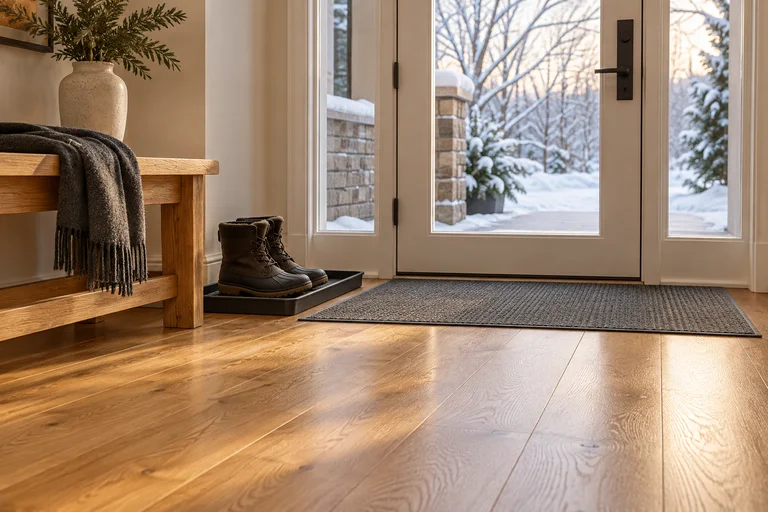
A snowy walk, a quick trip through the garage, a dog coming back inside: winter gives the entryway plenty to handle. Meanwhile, the wood floor in a quiet upstairs room may be responding to a different issue altogether, dry indoor air.
For Grand Rapids and West Michigan households, a useful winter routine has two parts. Keep outdoor moisture and grit from spreading through the house, and pay attention to the indoor conditions around the floor. You do not need an elaborate cleaning ritual. You need a setup that is easy to use every day.
Your winter floor-care plan at a glance
- At the door: make it easy to wipe shoes, remove boots, and contain drips.
- After a messy arrival: lift loose grit and promptly dry visible moisture.
- During normal cleaning: use the method and cleaner approved for your finish.
- Through the heating season: track indoor humidity against the flooring manufacturer's guidance.
- When something changes: document the location and timing, and ask about persistent or concerning damage.
The National Wood Flooring Association's winter guidance identifies tracked-in snow, water, and abrasive salt as concerns, alongside wood movement as indoor conditions change.
Build an entryway that catches the mess early
The best place to manage a wet boot is before it crosses the living room. Look at the door your household actually uses most often, including the garage entrance. A beautiful front-door mat does little for the floor if everyone comes in somewhere else.
Set up a simple arrival sequence:
- Wipe or brush off outdoor debris before entering.
- Step onto an appropriate indoor mat.
- Remove wet footwear in a designated spot.
- Hang wet coats and set down bags where drips can be handled.
- Keep a clean towel within reach for paws and unexpected puddles.
Check beneath mats and boot trays rather than assuming the covered floor stays dry. Empty collected water, clean away trapped grit, and let the area dry before resetting it. A crowded entryway often needs a larger or better-positioned landing zone, rather than another bottle of cleaner.
Choose mat and pad materials that suit the floor finish. Somerset's preventative-care guidance emphasizes clean mats, breathable materials, and compatible backings. Ask the flooring or finish manufacturer before choosing a backing simply because it is labeled non-slip.
Clean salt and grit without grinding them into the surface
When you notice white residue or small particles near the doorway, avoid a hard scrubbing session as your first move. Start by collecting loose debris with a suitable dry-cleaning tool, then address any remaining film using the cleaner and method approved for the finish.
Use a clean pad or cloth. Working repeatedly with a gritty one can turn a small entryway mess into a whole-room chore. If the residue does not lift with the approved method, pause and ask for product-specific advice rather than escalating to a stronger household chemical.
The NWFA's maintenance advice recommends sweeping, dust mopping, or vacuuming on a bare-floor setting, prompt spill cleanup, and a cleaner chosen for the actual finish. It advises against wet and steam mopping.
Know the finish before choosing the cleaner
A urethane-finished floor and an oil-finished floor may need different care. If you recently moved in, look for an installation receipt, finish container, or care sheet left by the previous owner. If none exists, make a note of the products currently being used and ask a flooring professional how to proceed.
This distinction is practical: Bruce's cleaning guidance specifically notes that some oiled floors should not be cleaned with its standard recommended hardwood cleaner.
Keep a small floor-care record with:
- Flooring or finish product, if known
- Approved cleaner and dilution, if applicable
- Recommended mop or pad
- Indoor humidity guidance
- Date of the last professional maintenance or refinishing work
It is useful when someone else cleans the house, when you replace a product, or when you contact a contractor about a change.

Pay attention to dry indoor air, too
Wood responds to moisture in its surroundings. In dry conditions it can shrink, and gaps may become more noticeable. The NWFA notes that some seasonal gaps close again as conditions change; large or persistent gaps deserve professional attention.
A small indoor humidity meter can help turn “the house feels dry” into a useful observation. Record readings over several days and note where the meter is located. Compare them with the requirements for your flooring instead of relying on a single internet number.
For context, NWFA's winter article gives a general 30–50% relative-humidity range, while Bruce's hardwood FAQ specifies 35–55% for its guidance. The difference is a reason to check the actual product, not to choose whichever number is easiest.
If indoor conditions are consistently outside the recommended range, discuss a practical plan with the appropriate flooring or HVAC professional. Do not make aggressive humidity changes or ignore condensation elsewhere in the home to pursue a target for the floor.
Seasonal change or a problem to investigate?
| What you notice | A useful next step |
|---|---|
| Small gaps that seem to vary with the season | Record humidity and when the gaps appear; ask for guidance if uncertain |
| A dull traffic lane near the entry | Review cleaning history and discuss whether maintenance is appropriate |
| Persistent residue after approved cleaning | Stop experimenting and identify the finish before changing products |
| New darkening, raised edges, loose boards, or an active leak | Address the moisture source and arrange an assessment promptly |
| Large gaps or changes that do not settle as conditions normalize | Request professional evaluation rather than assuming normal seasonality |
This is an observation guide, not a remote diagnosis. A photograph or a single humidity reading cannot establish what is happening underneath a floor. If there is an active leak or a trip hazard, do not wait for spring to seek help.
A short weekly reset
Choose a moment when the entryway is relatively quiet. Empty and dry the boot area, clean the mats, remove debris from beneath them, check nearby boards, and put fresh cloths back within reach. Walk the usual route from the door to the kitchen and look for the places where grit escapes.
Then make one improvement. Move the boot storage closer. Add a place for wet bags. Make the towel easier to find.
If the finish is already worn or dull, extra cleaning will not necessarily restore it. Our recoat-versus-refinish guide explains the different conversations to have about an existing floor.
Keep in mind“A workable routine is more valuable than a perfect checklist that nobody follows.”
Frequently asked questions
Should I fill gaps as soon as they appear in winter?
Have the cause and seasonal pattern assessed first. A visible gap alone does not tell you which repair is suitable. Share when you first noticed it and whether it changes over time.
Are engineered hardwood floors unaffected by winter humidity?
No. Engineered wood still has environmental requirements. Follow the specific product's instructions; “engineered” is not permission to ignore indoor conditions.
Does a dull floor always need refinishing?
No. The issue could involve cleaning, the existing finish, or wear that needs professional maintenance. An assessment can separate those possibilities before you commit to a larger project.
Give your floor a clear plan for the season
If winter has revealed worn finish, persistent gaps, or changes you cannot explain, start with a conversation. Note the rooms involved, when the issue began, and any known cleaner or finish history.
Request an estimate from Kingstree Flooring for your Grand Rapids or West Michigan flooring project, or call (616) 414-2412. Bring the observations; discuss the right next step before adding another product or planning a repair.