Buff and Recoat vs. Full Refinishing: Which Does Your Hardwood Floor Need?
A tired-looking wood floor does not automatically need to be sanded. Learn which questions separate a maintenance refresh from a full transformation.
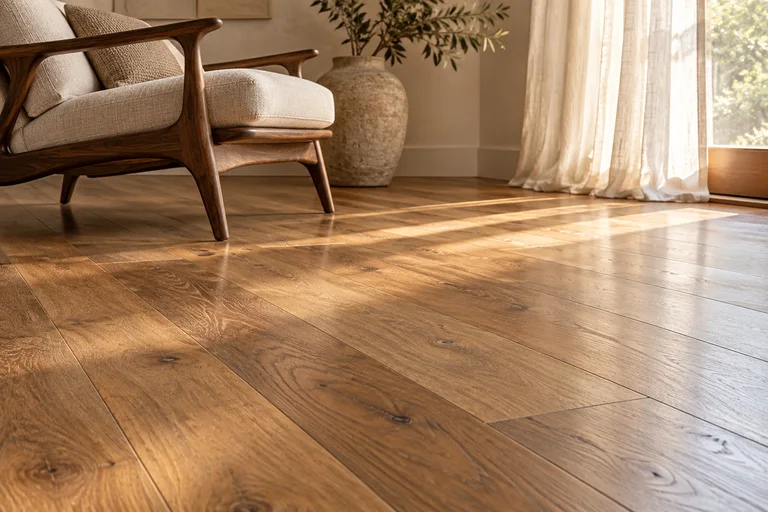
The floor still has the grain you love. But the hallway looks dull, the chairs have left their marks, and the afternoon light makes every scuff impossible to ignore. Does that mean starting over?
Not necessarily. A maintenance recoat renews a suitable floor's protective finish. Full sanding and refinishing goes further, creating an opportunity to address deeper wear and change the appearance of the wood. For a Grand Rapids homeowner planning the next step, the useful question is not simply, “How old is my floor?” It is, “What needs to change?”
The short answer
Consider a maintenance recoat
the existing finish is still intact, the concern is mostly surface wear, and you would be happy keeping the floor's basic appearance.
Discuss full refinishing
the finish has worn through, scratches reach the wood, or you want a substantial color change.
Arrange an assessment first
boards are loose, distorted, badly stained, or affected by moisture. A coating alone cannot resolve every flooring problem.
These are starting points for a conversation, not a diagnosis from across the room. The National Wood Flooring Association's refinishing guidance distinguishes a maintenance coat from sanding back to raw wood and emphasizes that the floor's condition matters.
What a buff and recoat actually changes
Think of a recoat as work on the protective surface. In a typical compatible system, the existing finish is cleaned, prepared with light abrasion, and covered with a fresh coat. The goal is to renew protection and improve the surface appearance while retaining the wood and color underneath.
Bona's recoat overview explains this distinction. The exact preparation and coating depend on the existing floor, so “buff and recoat” should not be treated as a universal recipe.
It is also different from wiping on a consumer polish. If you are considering professional work, avoid adding a new shine-restoring product simply to make the floor look better before the appointment. Tell the contractor what has already been used and let the condition of the existing surface guide the recommendation.
What full sanding and refinishing changes
Full refinishing removes the old finish and sands the wood before a new finishing system is applied. It can offer a broader change in appearance, including a new stain color where the wood and project conditions allow.
That does not mean every mark will disappear. A deep gouge, heavily stained board, or damaged edge may need a separate repair decision. Ask which areas are likely to improve through sanding, which may remain visible, and whether any boards should be replaced.
A helpful estimate answers two questions: what work will be done, and what outcome is reasonable to expect. Both matter more than the label at the top of the quote.
Compare the two options side by side
| Your question | Maintenance recoat | Full sanding and refinishing |
|---|---|---|
| What is being renewed? | The existing finish surface | The wood surface and finishing system |
| Can it help a dull floor? | Potentially, if the floor and finish are suitable | Yes, but a larger intervention may be unnecessary |
| Can it remove damage below the finish? | Do not expect it to | Some damage can improve; deeper problems may need repair |
| Can I choose a dramatically different stain? | A standard clear recoat keeps the existing stain color | Sanding to bare wood allows a new stain where the floor is suitable |
| What must be checked? | Surface condition and coating compatibility | Condition, remaining sandable wood, and repair needs |
| What should the quote explain? | Preparation, finish, limitations, and return to use | Sanding, repairs, color/finish decisions, and return to use |
Neither option is automatically better. The right scope is the one that fits the floor and the result you want.
Four details that can change the recommendation
1. The depth and location of the wear
Walk through the rooms and identify your top three concerns. Is the issue a traffic lane, a group of chair scratches, or a dark area near a doorway? Describe what you see without trying to diagnose it.
Point out isolated problem spots as well as the largest rooms. A mostly attractive floor with one damaged area deserves a different discussion from widespread wear throughout connected spaces.
2. The products already on the floor
Cleaners, polish, wax, and previous coatings can affect the proposed work. Keep the product names or containers if you have them. If the history is unknown, say so.
Manufacturer instructions illustrate why this matters. Bona's recoating instructions call for checking compatibility and adhesion and addressing certain care-product residues before proceeding. Those are requirements for that system, not a claim about the products Kingstree uses.
Ask: “How will you determine whether my existing finish can accept the proposed coating?”
3. How much sandable wood remains
Some engineered hardwood floors can be refinished; others may not have enough usable wear layer for the proposed sanding. Previously sanded solid floors also need assessment. There is no dependable universal number of times every wood floor can be refinished.
If you have an installation invoice, leftover board, or product name, make it available. You do not need to identify the flooring yourself before contacting a professional.
4. Whether you still like the color
Separate wear from design. If the answer is yes, ask about maintenance options. If you want a significantly different tone, explain that early so the assessment can address the right project.
Our guide to choosing hardwood stain colors and sheen can help you turn inspiration images into a clearer design brief.
Keep in mind“If the finish looked fresh tomorrow, would you love the room?”
Compare estimates without missing the important work
Use this short checklist before accepting a proposal:
- Which rooms, closets, stairs, and transitions are included?
- Are repairs included, optional, or priced separately?
- Which existing marks are expected to remain?
- What finish and sheen are proposed?
- Who moves furniture and handles any appliance-related work?
- What dust-management and cleanup measures are included?
- What conditions could change the scope?
- When can people, furniture, rugs, and routine cleaning return?
Do not assume the date the work ends is the date every household activity can resume. Request written instructions for the actual finish. Our refinishing preparation checklist walks through the household planning questions.
Frequently asked questions
Is a recoat always cheaper than refinishing?
It generally involves less extensive work, but the useful comparison is between written scopes for your floor. A lower-priced treatment that cannot achieve your goal is not a good substitute for the appropriate work. Ask for project-specific guidance rather than applying a national price range to your home.
Will recoating remove pet scratches?
Shallow finish scratches may become less noticeable after a compatible recoat. Scratches that cut into the wood generally remain because recoating does not sand away the damaged wood. Point out those areas during the assessment.
Should I wait until the floor looks much worse?
If you are noticing wear, ask about it. Understanding the current condition gives you a chance to plan maintenance or a larger project deliberately, rather than guessing which treatment will work later.
Find out what your floor actually needs
You do not need to choose the service before making the call. Start with the rooms involved, the wear you have noticed, and the appearance you want to keep or change.
Request a flooring estimate from Kingstree to discuss your Grand Rapids or West Michigan project, or call (616) 414-2412. A useful conversation starts with your floor, your priorities, and the right questions.