How to Choose Hardwood Floor Stain Colors and Sheen
The best floor color starts with your room, your actual wood, and a sample you have seen in real light. Here is how to narrow the choices without guessing.
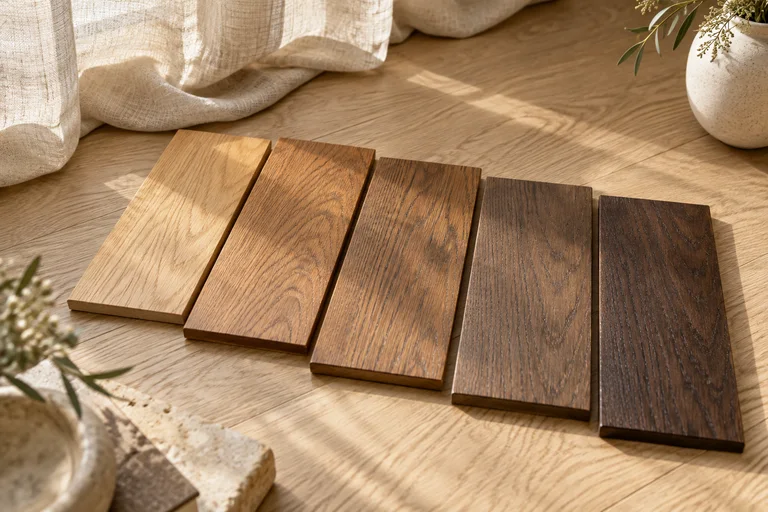
A wood floor is one of the largest surfaces in a room, which makes its color feel like a very big decision. The light oak in an inspiration photo looks calm. The deep brown sample looks rich. Then you hold both next to the kitchen cabinets, and the decision gets complicated.
The simplest way forward is to choose in stages: establish a direction, narrow the color, compare the sheen, and review a representative sample in the room. For a hardwood project in Grand Rapids or West Michigan, the goal is a floor that works with your home and everyday life, not just one attractive photograph.
Start with three separate choices
Color
is the overall tone you see, created by the wood and the proposed coloring/finishing system.
Sheen
is how much light the finished surface reflects. Matte, satin, semi-gloss, and gloss describe different visual effects.
Finish system
is the product or combination of products providing the finished surface and its care requirements.
Choose color, sheen, and care requirements together. A natural-looking floor may use a sealer and finish without a separate stain, while other systems combine color and protection. Review the complete proposed system: “matte” does not specify a color, and a stain sample alone does not show the final finished appearance.
Choose a direction before choosing a stain name
Start by looking at the features that will stay: cabinetry, stone, tile, doors, wood trim, and large pieces of furniture. Paint and accessories may change later; a fixed kitchen usually deserves more weight in the decision.
Then write a short brief. Three plain-language goals are enough:
- The room should feel light and relaxed.
- The floor should sit comfortably beside the existing cabinets.
- The finish should have a quiet reflection rather than a pronounced shine.
Your goals may be entirely different. The point is to have a test for each sample. Without one, it is easy to keep collecting options that solve different design problems.
Bring a few inspiration images and identify what you like in each. Is it the color, the low sheen, the wide boards, the grain, or the daylight? A picture can contain several appealing features, and a stain alone will not recreate all of them.
Compare color families, then refine
| Color direction | What to evaluate in your home | A useful question |
|---|---|---|
| Light or natural-looking | Relationship to pale walls, cabinets, and the wood's own undertones | Does it feel warm, neutral, or cooler than expected? |
| Medium brown | How it connects existing woodwork and furniture | Does it coordinate without looking like an almost-match? |
| Deep brown or dark | Contrast with trim, furnishings, and everyday dust or pet hair | Do I enjoy this contrast in normal room light? |
| Gray, white, or other toned effects | How pigment interacts with the actual wood and surrounding finishes | Does the sample still look right beside fixed materials? |
These are design prompts, not rules about which color belongs in which style of home. A traditional room can have a light floor. A contemporary room can have warm brown wood. Test the relationship in the actual space.
Your wood is part of the color
Wood species and natural board variation matter. DuraSeal's official stain gallery shows colors on both red oak and white oak, notes that natural wood tones vary, and warns that screen and print colors may not match the actual coating.
Use online swatches to shortlist a direction. Avoid asking a contractor to match a screenshot exactly without discussing what is achievable on your existing floor.
If the project includes old and new boards, different species, or adjoining rooms, flag that early. Ask how representative samples will be made and what variation to expect. A sample should help you understand the floor you are choosing, including the variation that makes wood look like wood.
Keep in mind“A stain name is not a guaranteed finished color.”
Make the sample work harder
A small sample on a desk can be a useful first filter. It should not be the only view of a decision that will cover an entire room.
Ask the contractor how best to review the proposed system on representative wood. Rubio Monocoat's sampling guidance emphasizes matching the preparation and application process used for the final work. The principle is useful across the decision: compare like with like rather than comparing unrelated pieces of wood or incomplete finish systems.
Use this review sequence:
- Narrow the field. Start with a few meaningfully different options, then refine the strongest direction.
- Label every sample. Record the proposed color and finish so a favorite cannot become a mystery later.
- Place it where the floor will be. View it horizontally, near the cabinets, trim, or furniture that matter.
- Check different light. Look during the day and under the lamps you normally use in the evening.
- Step back. Evaluate it from the doorway and seated height, not only inches from the grain.
- Confirm what you are approving. Ask whether the sample represents the full proposed finish and what reasonable variation will remain.
Do not apply a test stain to the installed floor yourself without discussing placement and preparation. Let the project team explain the appropriate sampling approach.

Matte, satin, or gloss: choose the reflection you want
The NWFA's finish guide describes matte as the least reflective option, with satin, semi-gloss, and gloss creating progressively more shine. It also notes that lower-sheen surfaces tend to make small scratches and normal wear less noticeable.
That is about appearance. It is not a promise that a matte floor cannot scratch or that a glossier finish is automatically more durable. Ask about the performance and maintenance of the actual system, especially if the room sees active pets, rolling chairs, or heavy daily traffic.
A practical way to compare sheens is to use the same color in more than one sheen where samples are available. Otherwise you may end up choosing the darker color when what you really preferred was its softer reflection.
Watch the light from large windows. What looks subtle on a small sample may become a prominent reflection across a long room. There is no need to eliminate reflection entirely; decide how much you enjoy.
Finish the design decision with a care conversation
Before approving the look, ask:
- Which cleaner and routine care will this finish need?
- How should minor wear or damage be assessed later?
- What professional maintenance might be appropriate over time?
- When can the finished floor accept furniture, rugs, and normal cleaning?
- What written care instructions will be provided?
The most beautiful choice is easier to enjoy when you understand how to live with it. If you are working with an existing floor, our recoat-versus-refinish guide explains why a substantial color change is a different conversation from refreshing the surface.
Frequently asked questions
Can I make my existing wood floor look exactly like an inspiration photo?
Treat the photo as a design reference. The existing wood, condition, proposed products, and light in your home all shape the result. Ask which parts of the reference are realistic and review a representative sample before committing.
Is satin always the best choice?
No. Satin can be a useful middle ground, but the right sheen depends on the look you prefer and the available finish system. Compare it with matte or a higher sheen rather than choosing by name alone.
Should the floor match my cabinets exactly?
It does not have to. You may prefer coordination, a deliberate contrast, or a close relationship between tones. Compare samples beside the cabinets and look for a combination you like across the whole room.
Turn your shortlist into a flooring plan
Bring the room, the inspiration, and the practical questions together. You do not need a final stain name before discussing the project.
Request an estimate from Kingstree Flooring for your Grand Rapids or West Michigan installation or refinishing project, or call (616) 414-2412. Share the rooms involved, the features you want to keep, and the feeling you want the finished floor to create.